
Reversing Aging Is No Longer Theoretical. It's a Human Trial.
Inside David Sinclair’s bold bet that aging isn’t inevitable, but a biological software problem that science may one day be able to reset.
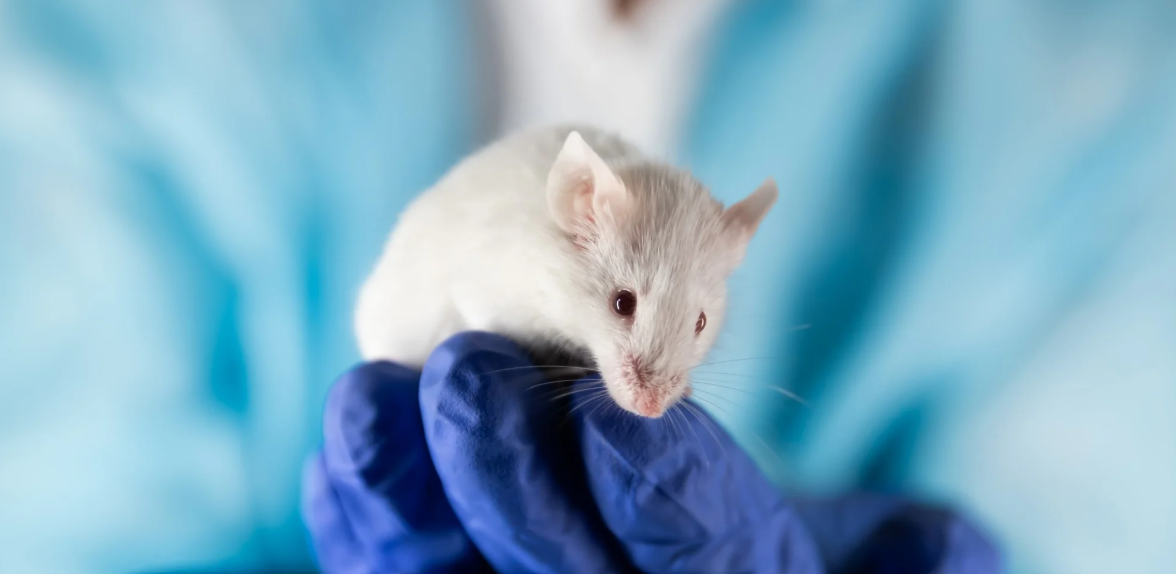
Three years ago, a team at Harvard did something that sounds like science fiction: they took healthy young mice, cut their DNA in twenty places, let the cells repair themselves, and watched the animals age decades in a matter of weeks. Hair fell out. Muscles weakened. Organs that should have had years left started failing like they belonged to a mouse three times their actual age.
Then the same team reversed it. A single gene therapy injection, and the mice's cells forgot they were supposed to be old.
I've spent my career trying to spot the moment a wild idea stops being a curiosity and starts being investable. Most of the time that moment takes a decade to arrive, if it arrives at all. This one has been moving fast enough that I've been paying close attention, and this year it crossed a line that matters: it's no longer just mice. In January, the FDA cleared the first human trial of this exact technology.
The Idea: Aging Is a Corrupted File, Not a Worn-Out Machine
Sinclair's theory, which he calls the information theory of aging, argues that our DNA doesn't get destroyed as we age. It gets harder to read. Every cell in your body carries the same complete genetic blueprint from birth to death, but the system that tells a skin cell to act like a skin cell and not a neuron slowly degrades. Sinclair compares it to an old computer: the files are still there, the software just gets corrupted over time.
The mouse study, published in Cell, tested that theory directly. Researchers engineered mice whose DNA could be deliberately nicked in non-coding regions, forcing the repair machinery to work overtime without actually damaging any genes. That repeated repair process alone was enough to scramble the mice's epigenetic instructions and produce nearly every hallmark of old age. No genetic damage. No mutations. Just a body that forgot how to read its own blueprint.
The reversal came from a set of three genes known as OSK, delivered through a harmless virus. In the treated mice, damaged kidneys, muscles, and retinas showed measurable epigenetic repair. The team's language for it stuck with me: they can now drive an animal's biological age forward and backward almost at will.
"For the first time, this wasn't a mouse that just lived longer. It was a mouse that got old, and then didn't stay that way."
What Happens Next Isn't Hypothetical Anymore
That was 2023. What's happened since is the part that actually got my attention.
In January of this year, Sinclair's company, Life Biosciences, received FDA clearance to begin the first human trial of partial epigenetic reprogramming in history. The therapy, ER-100, uses the same three OSK genes and targets two conditions that cause blindness: glaucoma and a stroke-like optic nerve event called NAION. Roughly a dozen patients with glaucoma and a handful with NAION will receive the injection, with early results expected as soon as later this year.
The mechanism is elegant. The genes are switched on with a common antibiotic, allowed to run for eight weeks while they reset the epigenetic code in damaged retinal cells, then switched back off. Cell identity stays intact. Nothing about it resembles the science-fiction version of "reprogramming" where a cell reverts all the way back to a blank slate. It's a partial reset, aimed at getting old cells to remember how to act young again.
The Honest Scorecard
I'll acknowledge the skepticism, because it's out there and it's fair to know about it.
Sinclair's early work on resveratrol and sirtuins led to a company, Sirtris, that GlaxoSmithKline bought for $720 million in 2008, and that bet didn't end up paying off the way anyone hoped. Some researchers also point out that an artificially aged mouse isn't a perfect stand-in for natural aging, and any therapy that resets cell identity deserves real scrutiny on safety. Fair points, all of it.
But I'd rather focus on what's actually different this time. The underlying biology, that these genes can reset a cell's epigenetic age, isn't seriously in dispute anymore. And this isn't a lab result being sold on a stage. It's an FDA-cleared human trial, with patients enrolling now. Sinclair could be wrong about how far this goes. He's been wrong before. But if he's right, even partially right, this doesn't just treat blindness. It rewrites how we think about every disease that gets more common as we get older. That's the kind of asymmetry worth paying attention to.
Why I'm Watching This Closely
I didn't get into this business by waiting for certainty. I got into it by paying attention early to ideas that were still splitting the room, and figuring out which side of that split was actually right. Right now, one of the most credentialed labs in the world just got the federal government's permission to test, in living patients, whether a person's cells can be told to forget they're old. That's worth watching closely regardless of how you feel about the man behind it.
If the eye trial produces real, repeatable improvement in patients who were otherwise losing their vision, it validates a thesis that touches gene therapy, longevity science, and eventually a much bigger question about how we treat every disease that gets more common as we age. If it doesn't, that's useful information too. Either way, this is the year we stop debating the theory in mice and start finding out what it does in us.