
America’s AI Infrastructure Is Growing Bigger Than You Realize
The Cloud is Physical
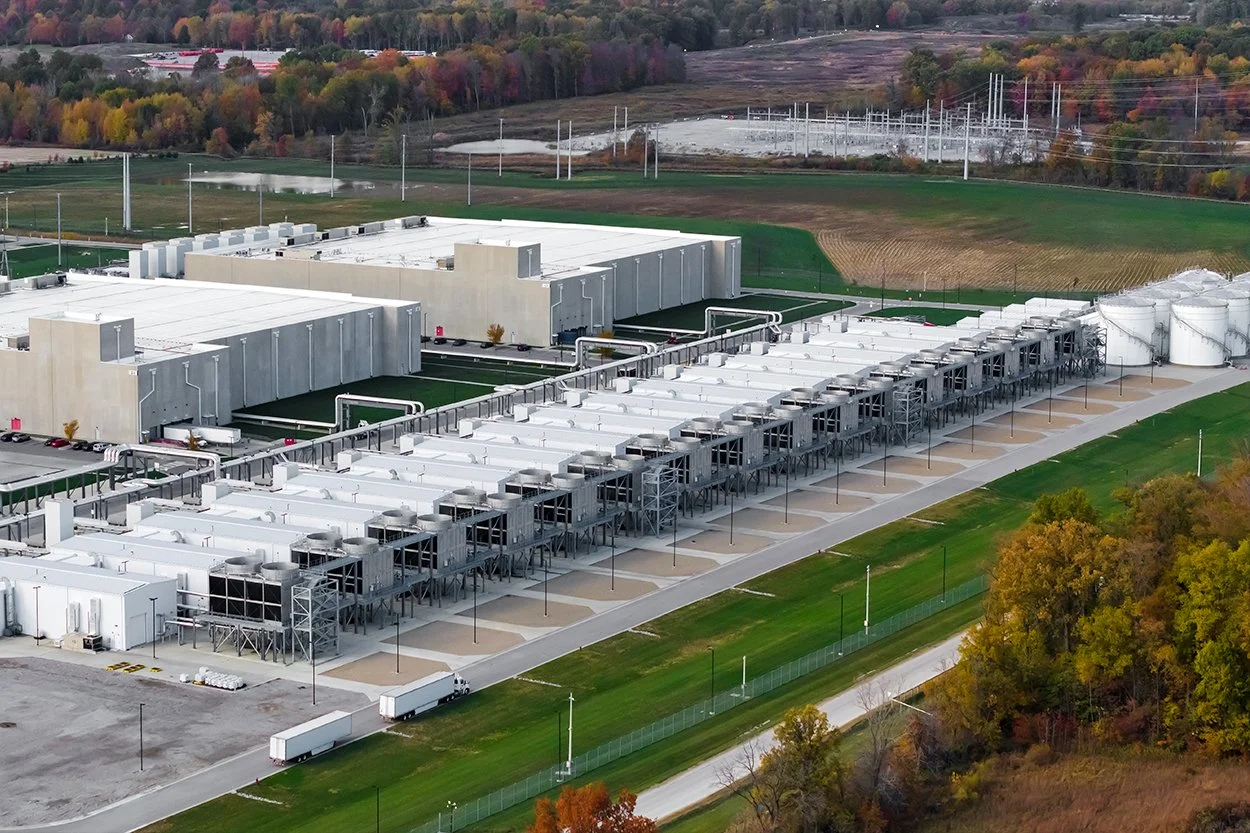
AI is often described as something abstract, floating somewhere in “the cloud.” In reality, it is anything but weightless. It runs on concrete data centers the size of aircraft hangars, copper transmission lines stretching for miles, advanced silicon etched at atomic scale, and staggering amounts of capital. What is unfolding across the United States right now is far more than a technology shift. It is a physical buildout reshaping the country’s economic foundation.
Across key regions, utilities are expanding substations and upgrading transmission infrastructure to handle surging load forecasts. Semiconductor manufacturing is being reshored and expanded under the CHIPS and Science Act. Massive data centers are rising across Northern Virginia, Texas, Arizona, and Georgia. While the public conversation revolves around chatbot releases and model upgrades, the more consequential story is the industrial backbone being constructed underneath it all. This is becoming one of the largest American infrastructure expansions since the early days of the commercial internet, only this time it draws power like a small nation.
Building at a Historic Pace
Today, data centers account for roughly 4% of total U.S. electricity consumption. Goldman Sachs Research projects that figure could approach 8–10% by 2030 as AI workloads expand. That is a potential doubling of power demand from a single sector within a decade.
Northern Virginia remains the largest data center market in the world, and utilities there have already had to reassess grid capacity because of the volume of new AI-driven projects. Texas continues attracting hyperscale campuses at record pace, while Arizona and Georgia are accelerating development pipelines.
Corporate capital commitments reinforce the scale. Microsoft, Amazon, Alphabet, and Meta have collectively guided toward well over $200 billion annually in capital expenditures, with AI infrastructure driving a significant portion of that allocation. This level of sustained investment signals long-term structural positioning.
Silicon is Now Strategic Infrastructure
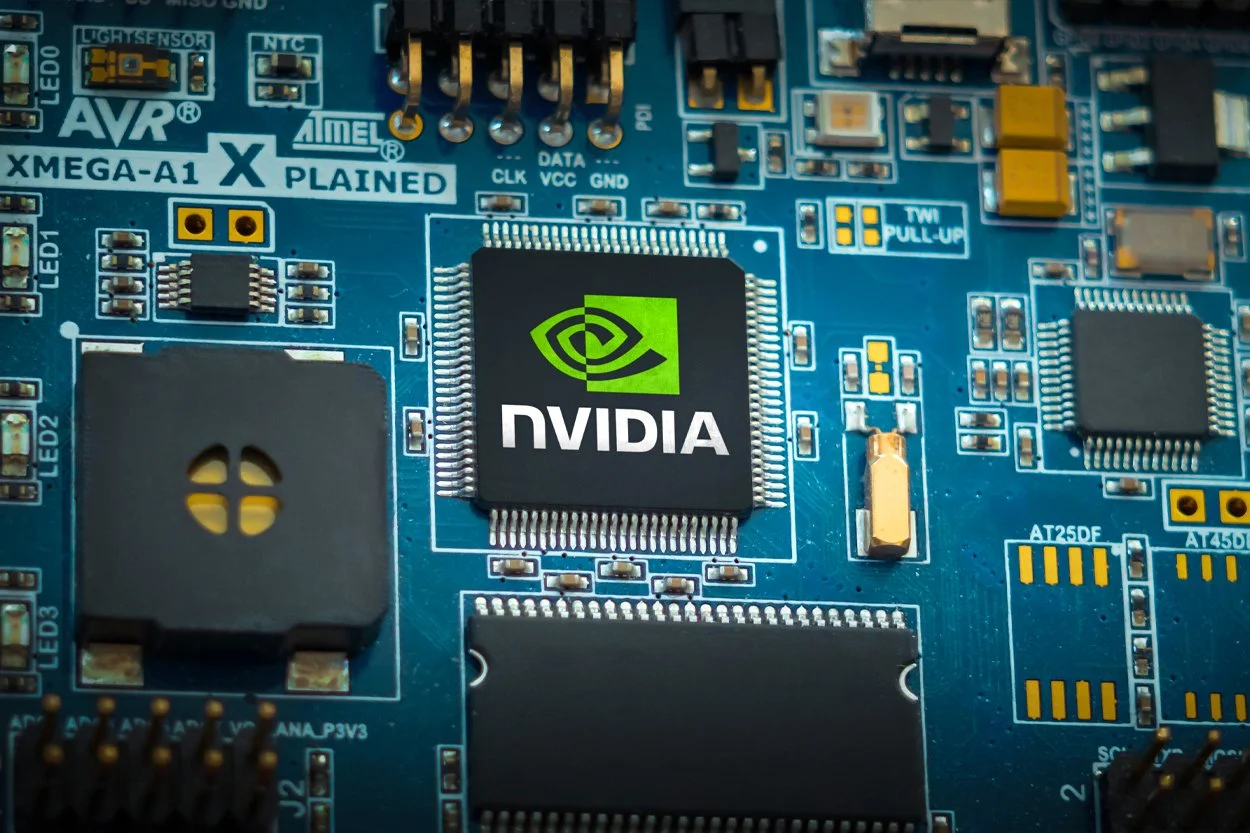
At the center of this expansion sits silicon. NVIDIA experienced historic growth in data center revenue during the AI acceleration phase, fueled by demand for high-performance GPUs such as the H100 and its successors. These processors are no longer niche research tools. They are industrial machinery for the digital economy.
The economic shift is moving toward inference. Training builds advanced models. Inference runs those models inside banks, hospitals, logistics networks, and manufacturing systems. As AI becomes embedded in daily operations across industries, inference demand becomes continuous. Continuous demand drives recurring revenue, which in turn supports long-term infrastructure investment. That shift anchors AI deeper into the core of American business.
The Real Bottleneck is Power
The International Energy Agency has warned that data center electricity consumption could double within just a few years, with the United States carrying a significant share of that growth. In Northern Virginia, transmission upgrades and power allocation have already become pressing concerns as new facilities seek grid access.
This reality is reshaping domestic energy strategy. Natural gas generation is regaining strategic attention. Nuclear energy discussions are reemerging. Grid modernization, including transformers and high-voltage transmission upgrades, is becoming central to economic planning. AI does not scale in theory. It scales in megawatts. Megawatts require regulatory alignment and disciplined capital deployment. It turns out the “cloud” runs on very heavy equipment.
Real Estate Repricing
Traditional office real estate has struggled in recent years. Data centers have not. In major U.S. markets, CBRE has reported vacancy rates below 3% during peak demand periods, with rental rates rising in regions where power is limited.
These are not short-term tenants. Data center operators sign long leases and invest heavily in specialized equipment that isn’t easy to move. Once installed, the infrastructure tends to stay. As banks, healthcare systems, and industrial companies weave AI deeper into daily operations, proximity to secure and scalable compute becomes essential. And markets tend to reward assets that become essential.
A Strategic National Issue

Beginning in October 2022, the United States imposed sweeping export controls on advanced AI chips and semiconductor manufacturing equipment to China. Those restrictions were expanded in 2023, tightening limits on high-performance GPUs used for AI training. At the same time, the CHIPS and Science Act began channeling billions of dollars into domestic semiconductor manufacturing and fabrication capacity.
Compute capacity now sits squarely inside national security strategy. Defense systems, cybersecurity infrastructure, and intelligence platforms depend on scalable domestic compute. The location of fabrication plants, access to advanced processors, and control over data infrastructure are no longer purely commercial considerations.
In the twentieth century, energy resources defined geopolitical leverage. In the twenty-first, control over advanced fabrication, high-performance processors, and domestic compute infrastructure may carry similar strategic weight.
The Bigger Perspective
Infrastructure cycles rarely look dramatic in real time. They take shape through zoning approvals, transmission upgrades, semiconductor facility expansions, and capital budgets that rise steadily year after year. By the time the shift becomes widely recognized, the foundation is already in place.
What is happening in the United States today is a structural buildout of physical systems designed to support AI across finance, healthcare, logistics, defense, and enterprise technology for decades. Cycles of this scale tend to favor those who pay attention to where long-duration capital is being committed. Applications and models will continue to evolve, but the infrastructure beneath them—power generation, grid capacity, advanced silicon, and data center scale—will remain central to the next phase of American economic growth.