
Your Next AI Query Might Be Answered From Space
This week, Google launches AI chips into orbit. It's a tiny test with a very big idea behind it: the future of computing may not be built on Earth at all.
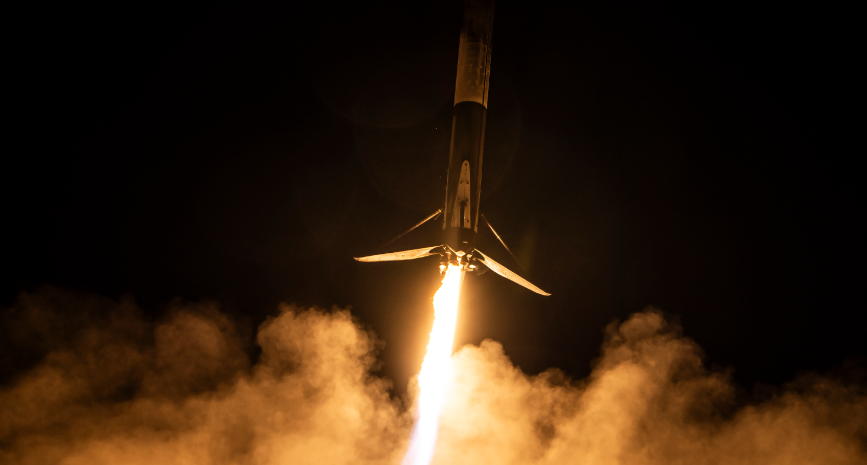
On October 1, Google is putting its AI chips on a SpaceX rocket and sending them into orbit. Not a rendering. Not a white paper. Actual hardware, running actual AI, circling the planet. I think this is one of the most important tech stories of the year, and most people will scroll right past it.
The project is called Suncatcher, and the premise is simple. AI is hungry for two things: electricity and a way to get rid of heat. On Earth, both are getting harder to come by. In space, one of them is almost unlimited. Google is betting that the smartest place to put tomorrow's data centers might be a few hundred miles straight up.
What's actually launching
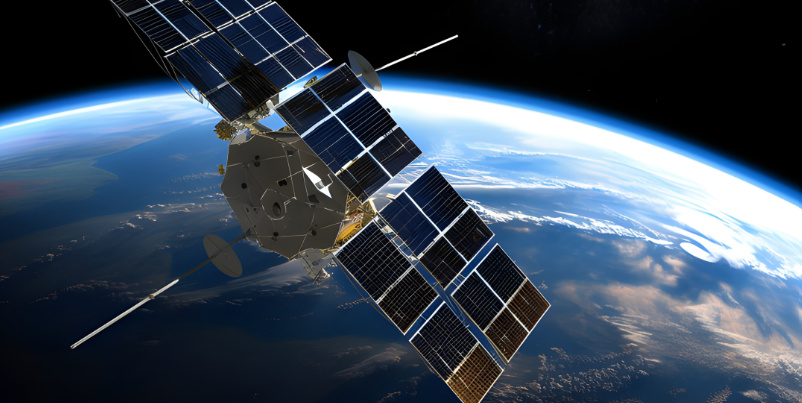
Let's be clear about scale, because this is not a data center in any traditional sense. The satellite is roughly the size of a refrigerator. Google's team nicknamed it MVP, as in minimum viable product. Inside are four of Google's custom AI chips, called TPUs, which together have about the computing power of a single server. It was built with Planet, the satellite company best known for imaging the Earth, and it's riding up on SpaceX's Transporter-18 rideshare mission.
Once it's up, the plan is to let it answer simple AI queries for about a year. The chips will run in short bursts of roughly 15 minutes before shutting down to cool off. That's not a limitation Google is hiding. It's the point. This mission exists to find out what breaks.
And the team has already tried hard to break it on the ground. They shook the satellite on all three axes to mimic a rocket launch. They ran the chips inside a thermal vacuum chamber to simulate the cold and emptiness of orbit. They even blasted the chips with a proton beam at UC Davis while running AI workloads, and Google says they survived a radiation dose greater than what they'd see over a five-year mission.
The most important technologies usually start out looking like toys. Four chips in orbit is a toy. The idea behind it is not.
Why space, and why now
Here's the problem Suncatcher is trying to solve. The AI buildout is running into physical limits on Earth. Data centers need enormous amounts of power, land, and cooling, and communities are starting to push back on noise, grid strain, and rising electricity bills. At least one city council has voted to pause new data center expansion entirely.
Space flips that equation. In the right orbit, a satellite gets near-constant sunlight, and Google has said solar panels up there can generate up to eight times more power than the same panels on the ground. No utility hookup. No zoning board. No neighbors. The long-term vision is constellations of satellites, each carrying dozens of chips, talking to each other through laser links and working together like one giant computer. Google has already committed to putting two more satellites up in 2027 to test exactly that.
The project lead has said something I love: if this really works, it will eventually become boring. Nobody will think twice about the fact that their AI query got answered from orbit. That's how you know a technology has won. It disappears into everyday life.
The honest skeptic's case
There are real reasons to doubt this. Heat is a serious problem in space, since there's no air to carry it away, and Google still has to prove its radiator system works in orbit. Launch costs have to come down dramatically for this to compete with facilities on the ground. Even Sam Altman has questioned whether space data centers can reach meaningful scale this decade.
All fair. But I'd point out that almost every transformative technology looked uneconomical at the prototype stage. Reusable rockets looked uneconomical. Electric cars looked uneconomical. The question isn't whether version one makes money. The question is whether the cost curve is moving in the right direction, and in launch, it very clearly is.
This is a race now
What makes this moment interesting to me as an investor is that Google isn't alone. Starcloud put an Nvidia H100 chip into orbit back in November 2025. SpaceX has made orbital computing a central part of its story and has asked regulators for permission to launch up to a million computing satellites. Blue Origin is reportedly working on it too. When the biggest, best-capitalized players in tech all start moving toward the same frontier at the same time, that's usually a signal worth paying attention to.
Whoever figures out orbital compute first won't just have a cool satellite. They'll have an answer to the biggest constraint in AI right now, which is energy. And the companies that control the launch capacity to get there may end up holding one of the most valuable positions in the entire buildout.
I don't know exactly when a meaningful share of AI compute moves off-planet. It could be ten years. It could be longer. But I know that on October 1, it stops being a thought experiment. That's worth watching.
"Every era of computing has been defined by where we put the machines. For the first time, the answer might not be on Earth."
— Paul Gravette, Founder & CEO, Gravette Capital